
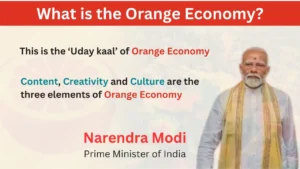
The Orange Economy, also known as the Creative Economy, refers to economic activities that are based on creativity, culture, knowledge, and intellectual property. In this economy, ideas, talent, and imagination become valuable resources for generating income and employment.
Unlike traditional industries that depend on natural resources or heavy manufacturing, the Orange Economy focuses on creative skills and cultural assets. Moreover, it encourages innovation and cultural expression while contributing to economic growth.
The term “Orange Economy” was first popularized by Iván Duque Márquez and Felipe Buitrago in their book about the creative economy.
Elements of the Orange Economy
The Orange Economy is built around three key elements that drive creative and cultural industries:
-
Content – Creation and distribution of digital and media content.
-
Culture – Preservation and promotion of cultural heritage and traditions.
-
Creativity – Innovative ideas that generate economic value.
These elements together form the foundation of modern creative industries.
Components of the Orange Economy
The Orange Economy includes several sectors that depend on creativity and intellectual property.
1. Cultural Heritage
This sector focuses on preserving traditional culture and historical assets. Examples include:
-
Handicrafts
-
Museums
-
Traditional art forms
-
Folklore and festivals
2. Cultural Industries
These industries produce cultural content for large audiences. For example, they include:
-
Music
-
Film and cinema
-
Publishing
-
Radio and television
3. Creative Industries
Creative industries use innovation and design to create commercial products and services.
Examples include:
-
Advertising
-
Architecture
-
Graphic design
-
Fashion
-
Gaming
4. Digital Creativity
With the rise of the internet, digital creativity has become an important part of the Orange Economy.
Examples include:
-
Mobile applications
-
Animation
-
YouTube content creation
-
Social media influencers
-
NFTs and digital art
Why Is It Called the Orange Economy?
The color orange is widely associated with creativity, enthusiasm, and cultural energy. Therefore, economists and policymakers use the term “Orange Economy” to represent industries driven by ideas, imagination, and artistic expression.
This metaphor highlights how creativity can become a powerful engine of economic development.
Significance of the Orange Economy
The Orange Economy has become increasingly important in the global economic landscape.
Economic Growth
Creative industries contribute approximately 3–6% of global GDP. Moreover, they are growing faster than many traditional sectors.
Job Creation
Globally, the Orange Economy provides employment to more than 30 million people, especially young professionals.
Cultural Preservation
Creative industries help preserve traditional art, music, and heritage while adapting them to modern markets.
Innovation and Exports
Creative products such as films, music, and digital content generate valuable intellectual property exports.
Soft Power
Countries can strengthen their global cultural influence through films, music, and creative content.
Economic Diversification
The Orange Economy helps nations diversify beyond agriculture and manufacturing sectors.
India and the Orange Economy
India has enormous potential to benefit from the Orange Economy due to its rich cultural heritage and large youth population.
Opportunities
India’s creative industries are expanding rapidly. For example:
-
Global popularity of Bollywood films and Indian music
-
The handloom and handicraft sector employing millions of artisans
-
Rapid growth of digital creators, influencers, and creative startups
These industries are creating new opportunities for entrepreneurship and innovation.
Government Initiatives
The Indian government has launched several programs to support creative industries, including:
-
Digital India
-
Startup India
-
Cultural mapping initiatives
-
Skill development schemes supporting artisans and creative workers
Challenges in India
Despite its potential, India faces several challenges in developing a strong Orange Economy ecosystem.
-
Lack of a formal national creative economy policy
-
Weak intellectual property enforcement
-
Limited access to funding for creative entrepreneurs
-
Informal employment structure in cultural sectors
-
Digital divide in rural areas
-
Limited market access for local artists and artisans
-
Lack of awareness about the economic value of creative industries
Way Forward
To fully harness the potential of the Orange Economy, several policy and institutional steps are necessary.
-
Formulate a National Creative Economy Policy
-
Strengthen awareness and protection of Intellectual Property Rights (IPR)
-
Promote creative skill education in universities and training institutes
-
Use digital platforms to support rural artists and artisans
-
Encourage public-private partnerships in creative industries
-
Integrate creative sectors with tourism and cultural diplomacy